Boxer's knuckle
Boxer's knuckle usually occur when the knuckles are struck by a clenched fist. The injury can result from a single direct and hard blow, or from multiple repeated blows. The index and middle fingers are most affected.
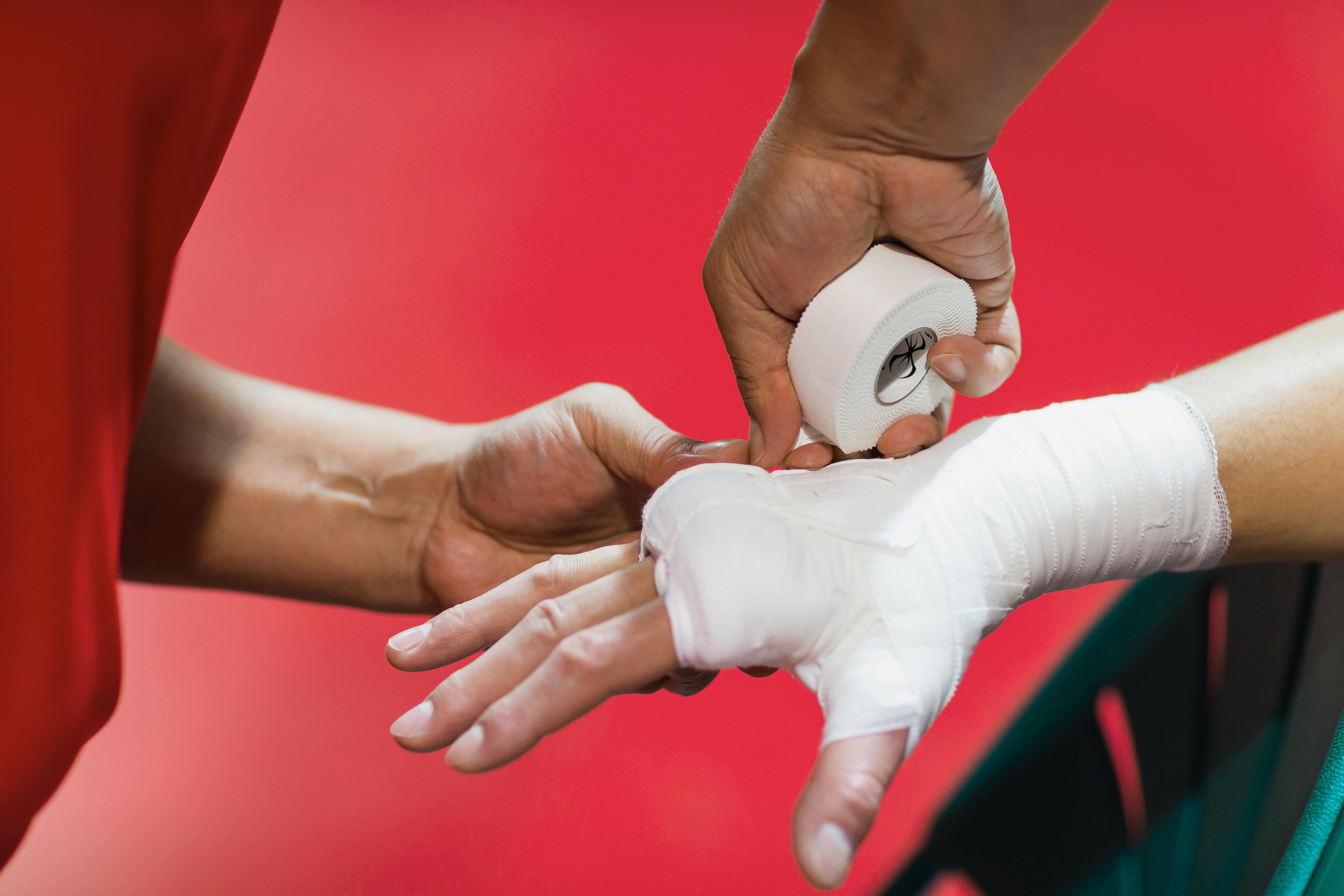
The injury typically occurs when the collateral ligaments on either side of the extensor tendons of the finger muscles tear partially or completely.
These collateral ligaments help keep the extensor tendons in place over the knuckles, and they make the tendons more stable when bending and extending the fingers.
In some cases, damage to the joint capsule and the cartilage at the base of the bones may also be observed.
It is important that boxer’s knuckle is detected and treated early to prevent further damage to the joints.
Symptoms
Typical symptoms include pain and swelling around the metacarpophalangeal joint (the joint between the bone and the finger). Reduced ability to extend the fingers. Often, you can both see and feel that the extensor tendon is dislocated or has slipped to the side.
Diagnosis
The diagnosis is usually made through a clinical examination, and an X-ray is typically not necessary. MRI scans and ultrasound can help determine the severity of the injury.
Treatment
Minor injuries to the joint capsule in the knuckles are treated both with and without surgery, depending on the severity. For active boxers, surgery is generally always recommended, followed by approximately six weeks in a cast.
Prognosis
Once the hand and fingers are pain-free and have regained full range of motion and grip strength, you can resume hitting practice. On average, it takes 8–12 weeks to return to sports after surgery.