Overview - hand injuries
Most hand injuries are only mild sprains involving the fingers or wrist.

Wrist Sprain
A sprain is a term used when the injured person has relatively mild symptoms and X-rays show no bone damage.
A wrist sprain can result from falling onto an outstretched hand, a direct blow to the wrist, or twisting the wrist while it is bent or extended.
A sprained wrist typically involves varying degrees of pain, tenderness, swelling, and reduced mobility.
The prognosis for a simple sprain is good. If other injuries are ruled out, you can resume sports within 1 to 2 weeks.
Finger Sprain
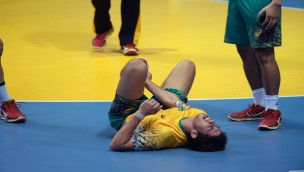
A sprained finger is a relatively common injury. Not surprisingly, this injury is often seen in sports where the fingers are particularly vulnerable, such as handball, basketball, and volleyball.
Symptoms: The finger swells, becomes painful and tender to the touch, and stiffens because the joint capsule and ligaments are overstretched.
If the pain is severe, the swelling is significant, or there is misalignment, an X-ray should be performed to rule out a fracture.
The vast majority of people make a full recovery after spraining a finger.
Fractures of the Hand
There are two types of fractures in the hand and wrist that are particularly common. They often occur when a person falls onto an outstretched arm. One type of fracture is a wrist fracture. The other is a fracture of the carpal bones.
The wrist can be located by finding the two bumps on either side at the bottom of the forearm, and a wrist fracture means—not surprisingly—that there is a fracture in this area.
A wrist fracture causes immediate pain, and it is painful and difficult to use the hand.
The goal of fracture treatment is to restore as normal a position as possible, meaning without anything becoming shorter or at an incorrect angle.
Fractures in the hand must be taken seriously to avoid future complications. If the fracture is uncomplicated and can be restored to its normal position, the wrist will usually become pain-free and fully functional
Carpal fractures often occur in the same way as wrist fractures, meaning that you fall and brace yourself with a straight arm—usually with the hand rotated outward.
The injury causes immediate pain, and it is difficult to use the hand.
If the fracture is not displaced, it can be treated with a cast.
To achieve normal range of motion, strength, and function, rehabilitation should be planned in collaboration with a physical therapist. Rehabilitation can begin once the cast is removed.
Bennet's fracture
Bennet's fracture is a fracture of the metacarpal bone in the thumb. Often, displacement occurs at the fracture site, causing the metacarpal bone to be pulled out of position.
Symptoms: Pain, swelling, and tenderness around the thumb extending toward the wrist, as well as reduced ability to move the thumb.
The fracture is treated with surgery, followed by casting and then gradual rehabilitation.
Ring ligament injuries
Ring ligament injuries are the most common finger injury among climbers. The ring ligament reinforces the flexor tendons on the inside of the fingers. Its function is to hold the tendons in place against the bone, much like the rings on a fishing rod.
Ring ligament injuries usually occur acutely.
The symptoms of a ring ligament injury are pain, tenderness, and swelling on the flexor side of the finger.
If only one flexor retinaculum is injured or torn, the injury is treated without surgery. This involves immobilization with tape or a splint for two weeks, followed by rehabilitation of the flexor muscles and a gradual increase in load, leading to sport-specific training.
The prognosis after a flexor retinaculum injury is good, but recovery may take some time.